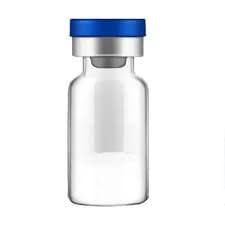
TB-500 5mg
Recovery
$89
Synthetic fragment of Thymosin Beta-4 that promotes tissue repair, reduces inflammation, and accelerates healing of muscle, tendon, and ligament injuries.
Overview
TB-500 is a synthetic version of the naturally occurring peptide Thymosin Beta-4, found in high concentrations at injury sites. It promotes actin regulation, cellular migration, and angiogenesis to accelerate tissue repair. TB-500 has been studied in equine and rodent models for its ability to heal tendons, heart tissue, skin wounds, and corneal injuries.
Lab Results — 5mg
Every batch is independently tested. Results below are from the Certificate of Analysis for the 5mg batch.
Scientific Details
Molecular Formula
C₂₁₂H₃₅₀N₅₆O₇₈S
Molecular Weight
~4.9 kDa
Form
Lyophilized peptide powder
Solubility
Soluble in bacteriostatic water
Dosage Range
2–5mg twice weekly (research context)
Plasma Half-Life
~5–6 hours
Bioavailability
~85% subcutaneous
Resources
Key peer-reviewed studies supporting the efficacy and safety of this compound.
Thymosin beta-4 and cardiac repair
Bock-Marquette I. et al. — Nature (2004)
Key FindingThymosin Beta-4 activated cardiac progenitor cells and significantly improved cardiac function after myocardial infarction in mouse models.
Thymosin beta-4 promotes corneal wound healing
Sosne G. et al. — Experimental Eye Research (2001)
Key FindingTB-4 accelerated corneal epithelial wound closure and reduced inflammatory infiltrate in multiple animal models.
Anti-inflammatory mechanism of thymosin beta-4
Sosne G. et al. — Annals of the New York Academy of Sciences (2007)
Key FindingTB-4 suppressed NF-κB signaling and reduced pro-inflammatory cytokine expression in corneal and systemic inflammatory models.