
MOTS-C 5mg
Performance
$89
Mitochondria-derived peptide that activates AMPK signaling to enhance metabolic flexibility, exercise performance, and insulin sensitivity.
Size
Overview
MOTS-C (Mitochondrial Open Reading Frame of the 12S rRNA Type-C) is a 16-amino acid mitochondria-derived peptide encoded by the mitochondrial genome. It acts as a metabolic regulator that translocates to the nucleus under stress to activate AMPK and promote glucose uptake. Research shows it enhances exercise capacity, insulin sensitivity, and age-related metabolic decline.
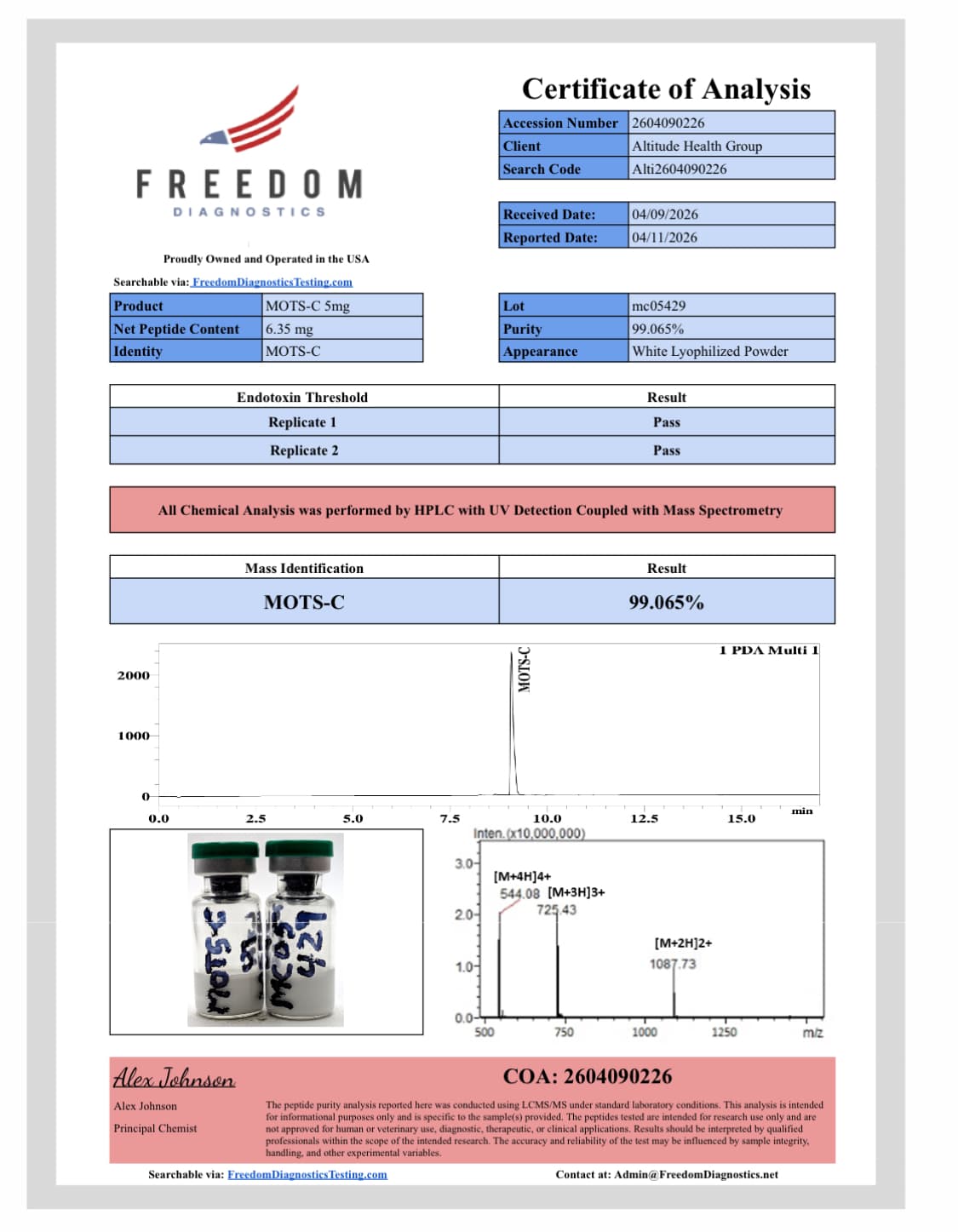
Lab Results — 5mg
Every batch is independently tested. Results below are from the Certificate of Analysis for the 5mg batch.
Certificate of Analysis
Scientific Details
Molecular Formula
C₇₅H₁₃₂N₂₂O₂₃S
Molecular Weight
1.8 kDa
Form
Lyophilized peptide powder
Solubility
Soluble in bacteriostatic water
Dosage Range
5–10mg weekly (research context)
Plasma Half-Life
~2–4 hours
Bioavailability
~80% subcutaneous
Resources
Key peer-reviewed studies supporting the efficacy and safety of this compound.
MOTS-C: a mitochondrial-derived peptide regulating muscle and fat metabolism
Lee C. et al. — Cell Metabolism (2015)
Key FindingMOTS-C activated AMPK in skeletal muscle, improved insulin sensitivity, and prevented diet-induced obesity in mouse models.
Exercise-induced mitochondrial peptide MOTS-C promotes physical performance
Reynolds J.C. et al. — Nature Communications (2021)
Key FindingExogenous MOTS-C administration enhanced running capacity and muscle function in aged mice, mimicking benefits of exercise training.
MOTS-C and the regulation of metabolic homeostasis
Kim S.J. et al. — Experimental & Molecular Medicine (2021)
Key FindingMOTS-C coordinated nuclear and mitochondrial stress responses, supporting its role as a systemic metabolic regulator.